One machine, two working ends
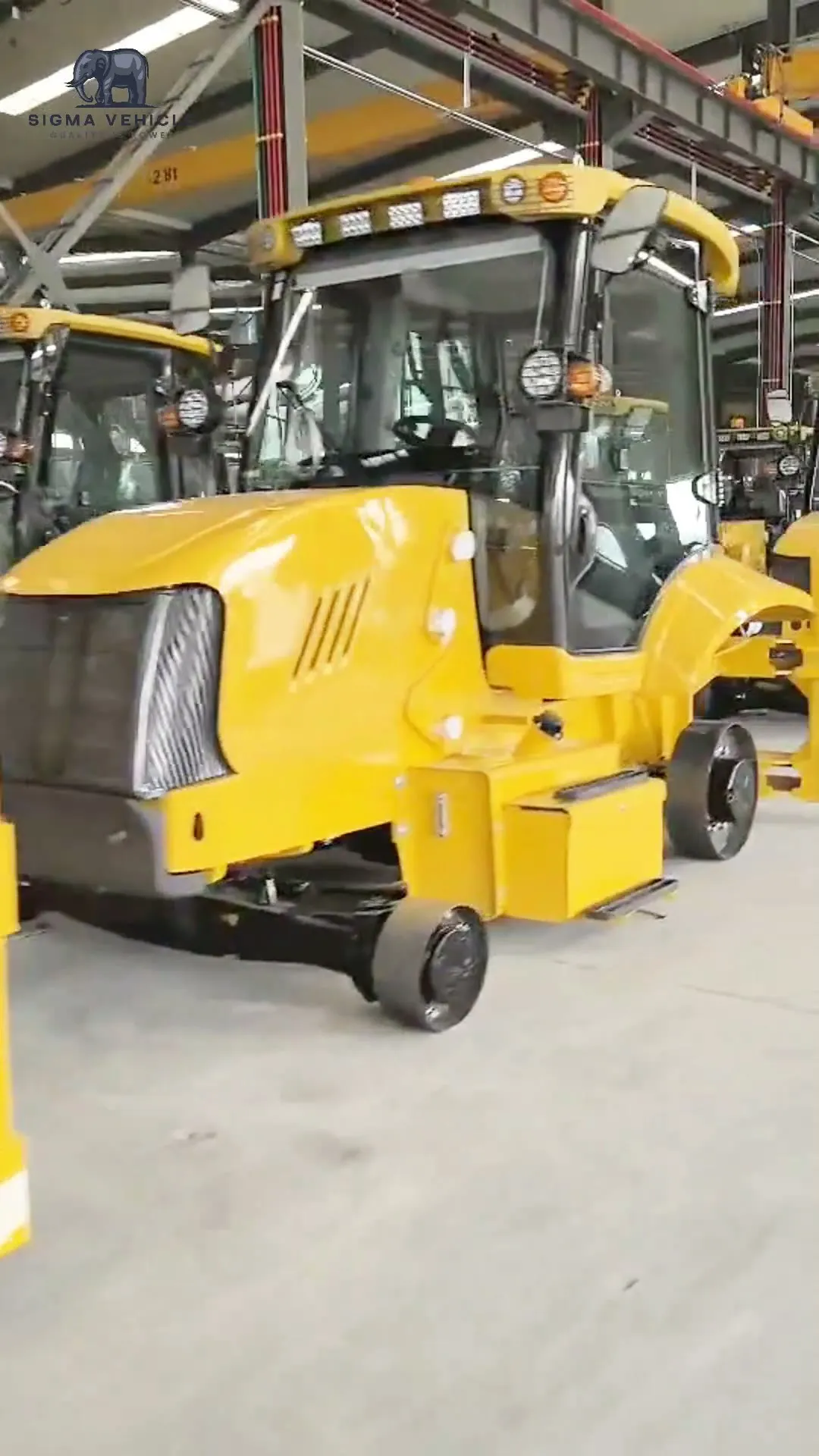
The front bucket loads and carries while the rear arm digs trenches and footings, covering work that would otherwise need a wheel loader and excavator on site together.
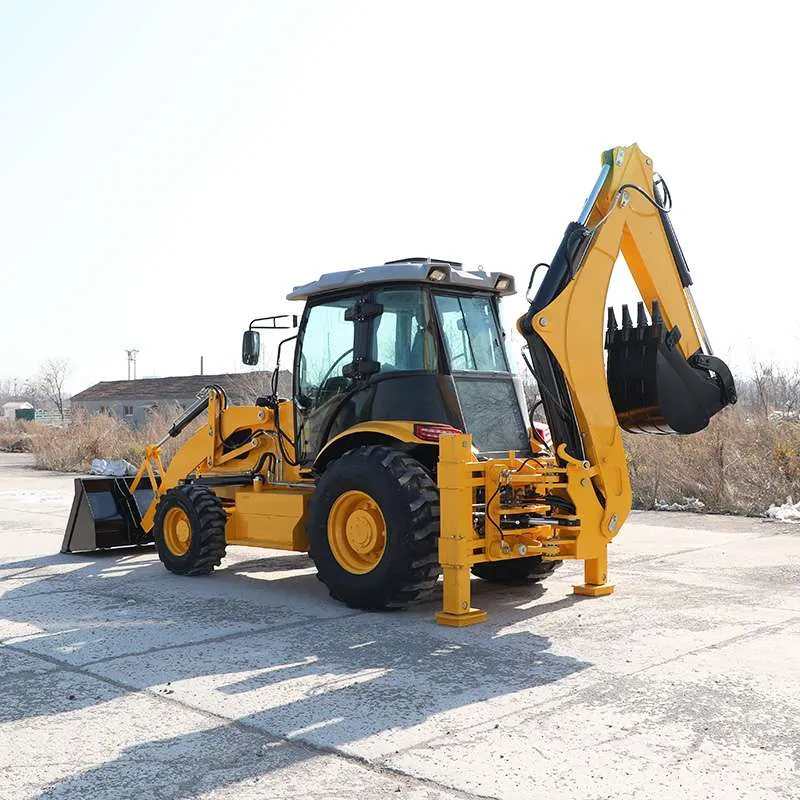
Loading & Digging Machine
A front loader bucket and a rear digging arm on one chassis, sized for utility and site work that does not justify running two separate machines.
A wheeled machine that loads from the front and digs from the rear, so one operator covers both jobs on sites too small for a separate loader and excavator.
The representative build carries a 1.0 m³ loading bucket at the front and a 0.3 m³ digging bucket on a rear arm that reaches 4.4 m deep and 5.47 m out, swinging ±85° to work either side without repositioning. A 65 kW Yuchai diesel drives four travel gears up to 33 km/h, so the machine moves between tasks under its own power.
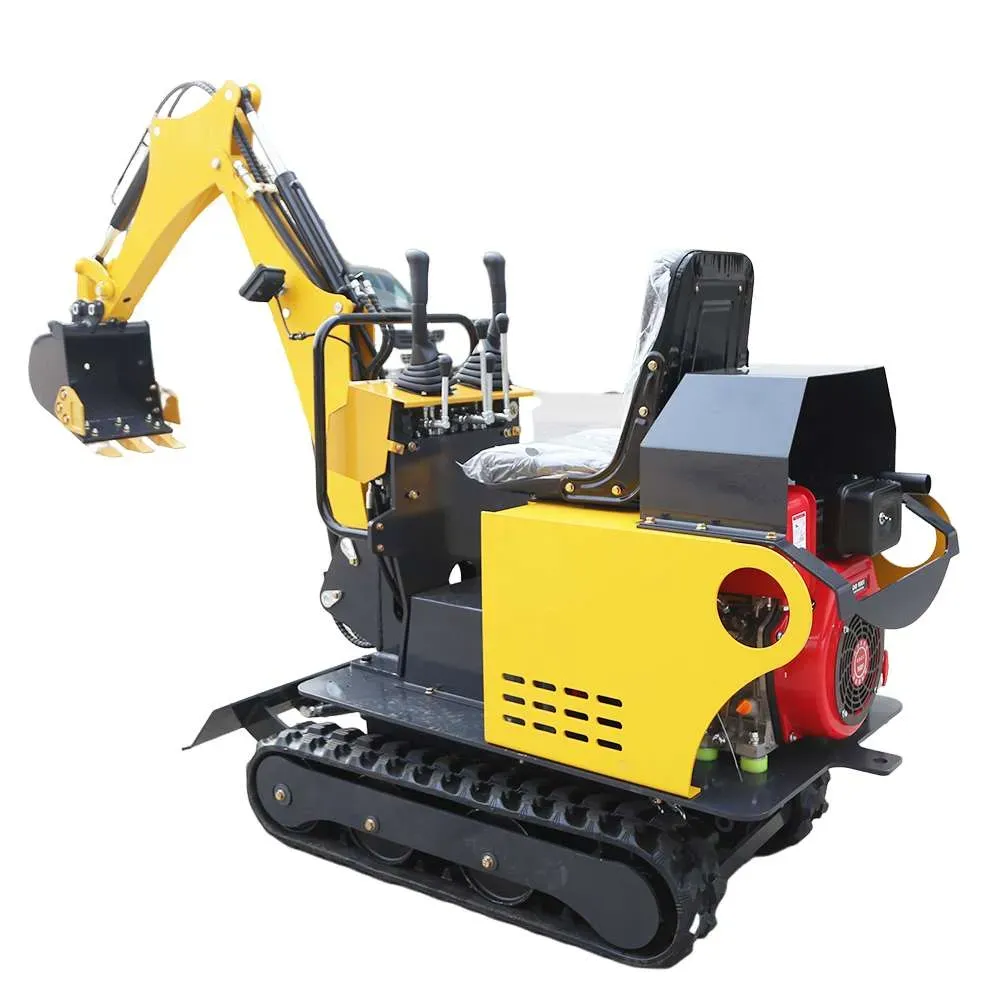
Backhoe loaders as a class sit in an 8 to 9.5 t operating-weight band rather than a wide spread of tonnages, so we size bucket capacity and reach to the job rather than treating every order as identical. Every unit ships as an export order, bucket widths matched to your typical job. A backhoe loader ordered alongside a mini excavator covers utility work and tighter-access digging.
Before crating, both the loader bucket and backhoe arm are cycled through a full lift-dig-swing sequence under hydraulic load, not just checked stationary.
Specifications
Representative build shown below (XCMG-class chassis, 9.5 t operating weight). Final bucket sizes, reach and engine are confirmed per order.
| Operating weight | 9,500 kg |
|---|---|
| Overall dimensions (L×W×H) | 8,000 × 2,200 × 3,350 mm |
| Wheelbase | 2,600 mm |
| Wheel track | 1,700 mm |
| Tyres | 16/70-24 |
| Max travel speed (4th gear) | 33 km/h forward / 28.5 km/h reverse |
| Max steering angle | ±35° |
| Engine | Yuchai YC4B90-T20 |
|---|---|
| Rated power | 65 kW at 2,500 rpm |
| Loading bucket capacity (heaped) | 1.0 m³ |
|---|---|
| Digging bucket capacity | 0.3 m³ |
| Max digging depth | 4,400 mm |
| Max digging radius | 5,471 mm |
| Max dumping clearance | 2,700 mm |
| Dumping distance | 950 mm |
| Backhoe swing angle | ±85° |
The front bucket loads and carries while the rear arm digs trenches and footings, covering work that would otherwise need a wheel loader and excavator on site together.
A 1.0 m³ loading bucket and 0.3 m³ digging bucket suit general utility work; we adjust width for narrower trenches or heavier loading volume.
A 33 km/h top speed lets the machine move under its own power between nearby sites, cutting the trailer moves a tracked excavator would need.
Left- or right-hand drive, your market's emission standard, and bucket widths matched to your typical job, set before the unit leaves the yard.
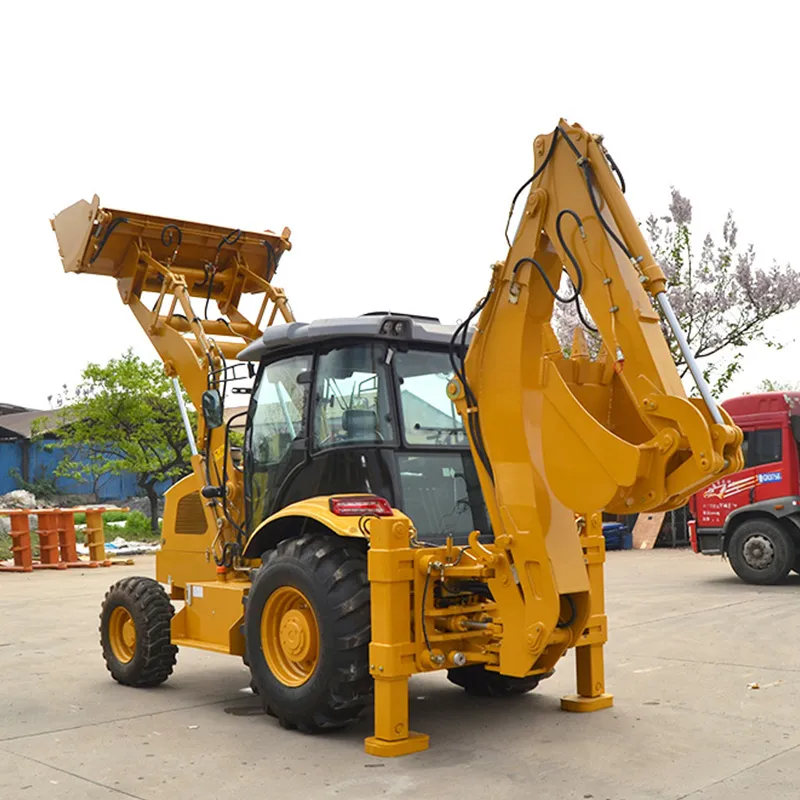
Backhoe loaders as a class sit in a fairly narrow 8 to 9.5 tonne operating-weight band — our representative build is 9,500 kg. The differences between builds come down to bucket capacity and digging reach rather than a large jump in overall machine size.
Yes. The 1.0 m³ loading bucket and 0.3 m³ digging bucket on the representative build are typical for general utility work; tell us your trench width or loading volume and we will confirm the bucket sizes for your order.
A backhoe loader combines a front loading bucket with a rear digging arm on one wheeled chassis and can travel at highway-adjacent speed between sites. A mini excavator is a dedicated tracked digging machine with a smaller footprint for tight-access work but no front loading bucket and a lower travel speed.
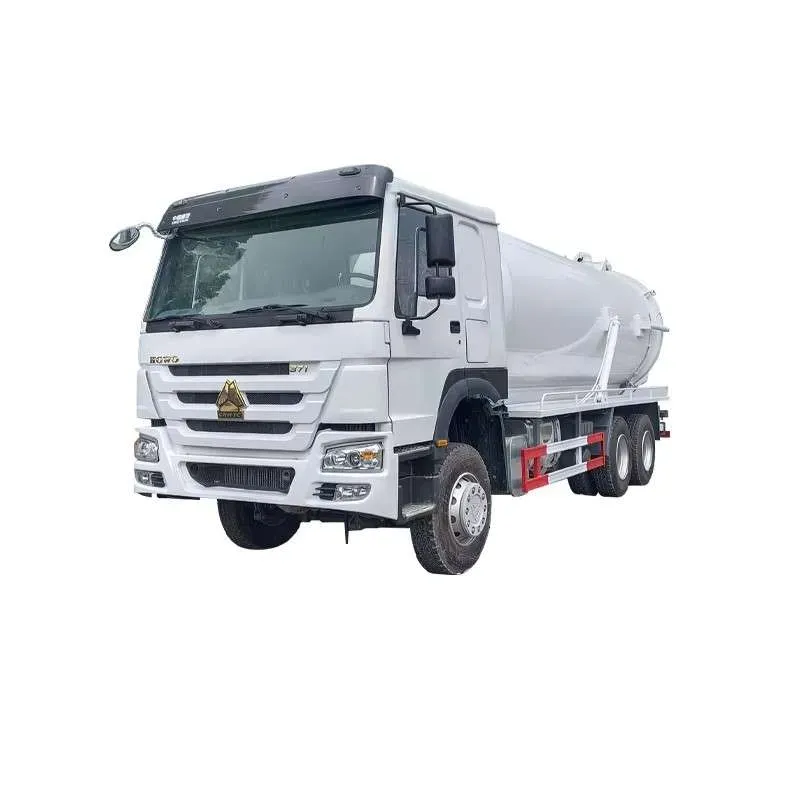
Yes. If you already have an order with us for a mini excavator, skid steer loader or one of our trucks, a backhoe loader can be added to the same production run and shipment, which is usually simpler than sourcing it separately.
Send the trench depth or loading volume your job needs and your destination port. We come back with a configuration sheet and an FOB or CIF price, usually within 72 hours.