QuanPu Industrial Park, Liangshan County, Shandong, China [email protected] +86 199 6378 9330
Get a quote
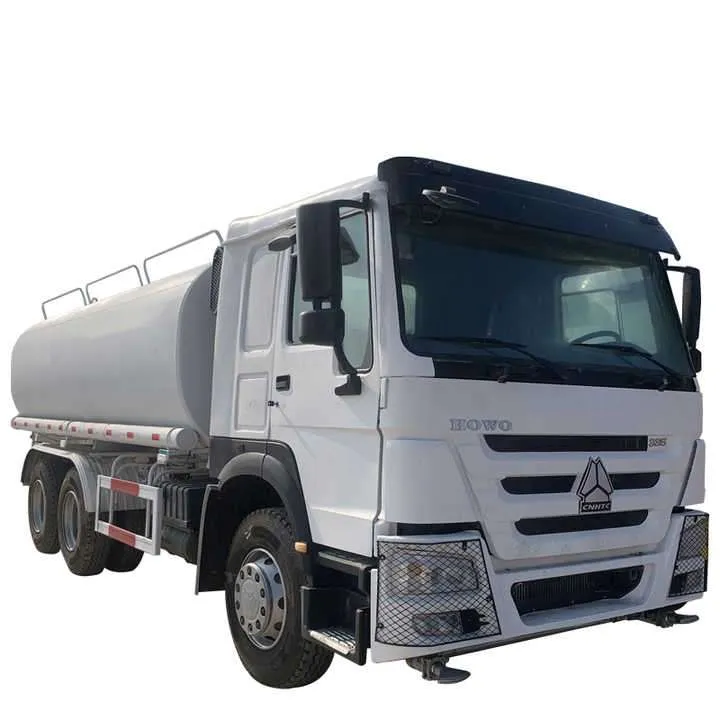
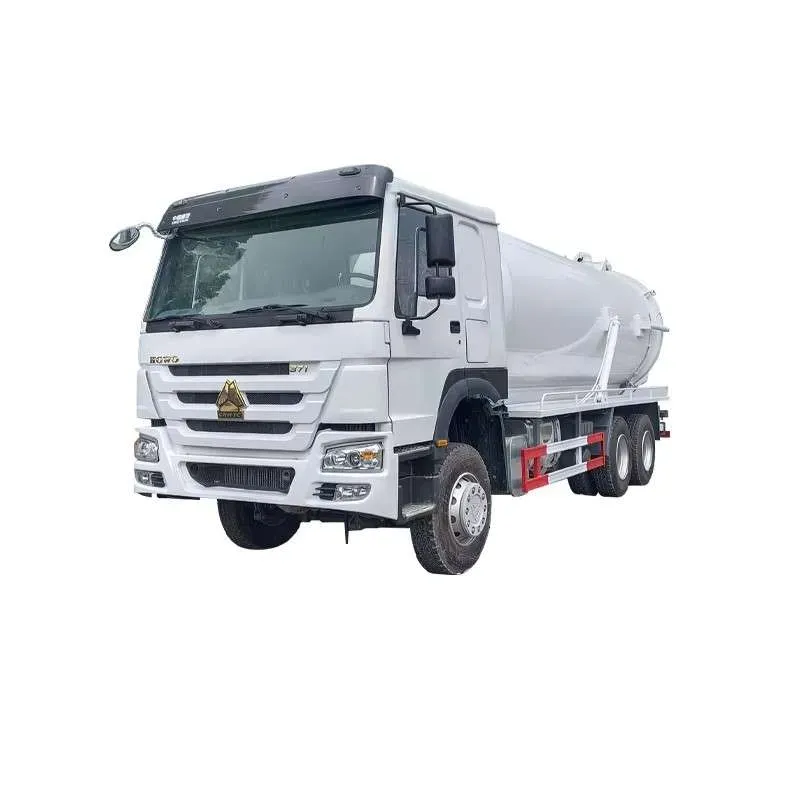
White HOWO 6×4 sewage suction truck, front three-quarter view on plain background

Municipal Sanitation Vehicle

Sewage Suction Truck

Vacuum tankers from 8 to 20 m³, on the chassis brand your workshop already services.

Tank capacity
8 – 20 m³
Drive
4×2 / 6×4
Vacuum pump
Italy MORO / Jurop / Weilong
Suction depth
8 m

Sewage suction trucks for septic, sewer and industrial waste removal

A vacuum tanker that empties septic tanks, clears blocked sewer lines and moves industrial slurry — mounted on a chassis your drivers and your workshop already know.

The tank is rolled from Q235 mild steel with internal baffle plates, so a part-filled load does not surge forward against the head when the truck brakes. Standard wall thickness is 6 mm; Q345B and stainless steel are available where the medium is corrosive. On the 8 m³ build the tank is 1,640 mm in diameter and sits on a 4,500 mm wheelbase, which keeps the truck usable in the narrow lanes where most septic work actually happens.

Suction comes from a heavy-duty rotary vane pump driven off the engine PTO. Both the pump and the four-way valve are mounted behind the cab, within reach of an operator standing on the ground rather than climbing the tank. Contractors running a mixed municipal fleet usually pair a septic pumper with a water tank truck so one crew covers both suction work and washdown on the same site.

Every truck is built as an export unit: left- or right-hand drive, Euro 3 through Euro 6 engines, and the discharge fittings, hose diameters and control-box labelling set to your local standard before it leaves the yard.

Each vacuum tanker is water-tested on our line before crating — the pump is pulled to its rated vacuum and the discharge valve is cycled under load, not just checked by eye.

Specifications

Sewage Suction Truck — technical data

Representative 8,000 L build shown below. Final specification is confirmed per order against your chassis brand, emission standard, drive side and destination port.

Chassis

Drive type 4×2 (6×4 on 18–20 m³ builds)
Cabin Forward tilting, 1 driver + 2 passengers
Wheelbase 4,500 mm
Overall dimensions (L×W×H) 7,200 × 2,496 × 3,290 mm
Tyres 10.00R20, 18PR tube type (+1 spare)
Ground clearance 280 mm
Turning radius 7 m
Gradeability 35 % at 20–30 km/h
Maximum speed 95 km/h

Engine & driveline

Engine 6-cylinder in-line, water cooled, diesel
Displacement 6.87 L
Rated power 206 kW (280 hp) at 2,300 rpm
Maximum torque 1,100 N·m at 1,200–1,800 rpm
Emission standard Euro 3 (Euro 4 / 5 / 6 optional)
Transmission Heavy-duty manual, 7 forward + 1 reverse
Front / rear axle rating 6 t / 10 t
Fuel tank 300 L

Vacuum tank

Capacity 8,000 L (8 m³)
Material Mild steel, grade Q235
Wall thickness 6 mm
Diameter 1,640 mm
Construction Cylindrical, internal baffle plates
Rear door Full-diameter, hydraulically opened and locked

Vacuum pump

Model / make PM80A / Italy MORO
Pump type Heavy-duty rotary blade (vane) type
Free air flow 12,000 L/min (720 m³/h)
Continuous duty vacuum 80 %, 23.6 in Hg
Maximum vacuum 95 %, 28 in Hg
Maximum operating pressure 3 bar absolute
Suction depth 8 m
Working speed 1,000–1,100 rpm

Suction & discharge

Suction hose PVC, 76–80 mm (3") internal diameter
Hose length 3 m carried each side, quick-connect couplings
Discharge Pressurised, gravity, or external air source
Discharge valve 100 mm ball valve
Over-pressure protection Safety valve fitted as standard
Hand-wash tank 25 L with soap dispenser

Capacity options

Tank capacityDriveTypical chassisVacuum system
8,000 L4×2SINOTRUK HOHAN, 280 hpMORO PM80A rotary vane, 720 m³/h
18,000 L6×4Dongfeng DFL1250, GVW 25 tHIBON Roots blower, 5,500 m³/h
20,000 L6×4Weichai 340 hp, GVW 25 tWeilong / Italy BP rotary vane

What is different about these trucks

Pump sized to the job, not to the brochure

A rotary vane pump moves 720 m³/h and pulls 95 % vacuum — right for septic tanks, grease traps and blocked house connections. Above 18 m³ we fit a Roots blower instead, which shifts far more air at lower vacuum and suits sludge lagoons and industrial pits. Ordering the wrong one is the most common mistake buyers make.

Serviceable in your own workshop

Chassis are HOWO, Dongfeng, Shacman or Hohan — brands with parts counters in most of the markets we ship to. The vacuum pump, valves and PTO are standard items, so a sewage pump truck stays on the road instead of waiting for a container of spares.

Baffled tank, tested before it ships

Internal baffle plates stop the load surging under braking, which is what cracks tank heads on cheap builds. The rear door is a full-diameter hydraulic type so the tank can actually be washed out, and each unit is water-tested at rated vacuum before crating.

Configured for the destination

Left- or right-hand drive, Euro 3 to Euro 6, local hose and coupling sizes, control-box labelling in your language. We prepare the CO, invoice and packing list for your customs broker and can quote FOB Qingdao or CIF to your port.

Sewage suction trucks in the yard

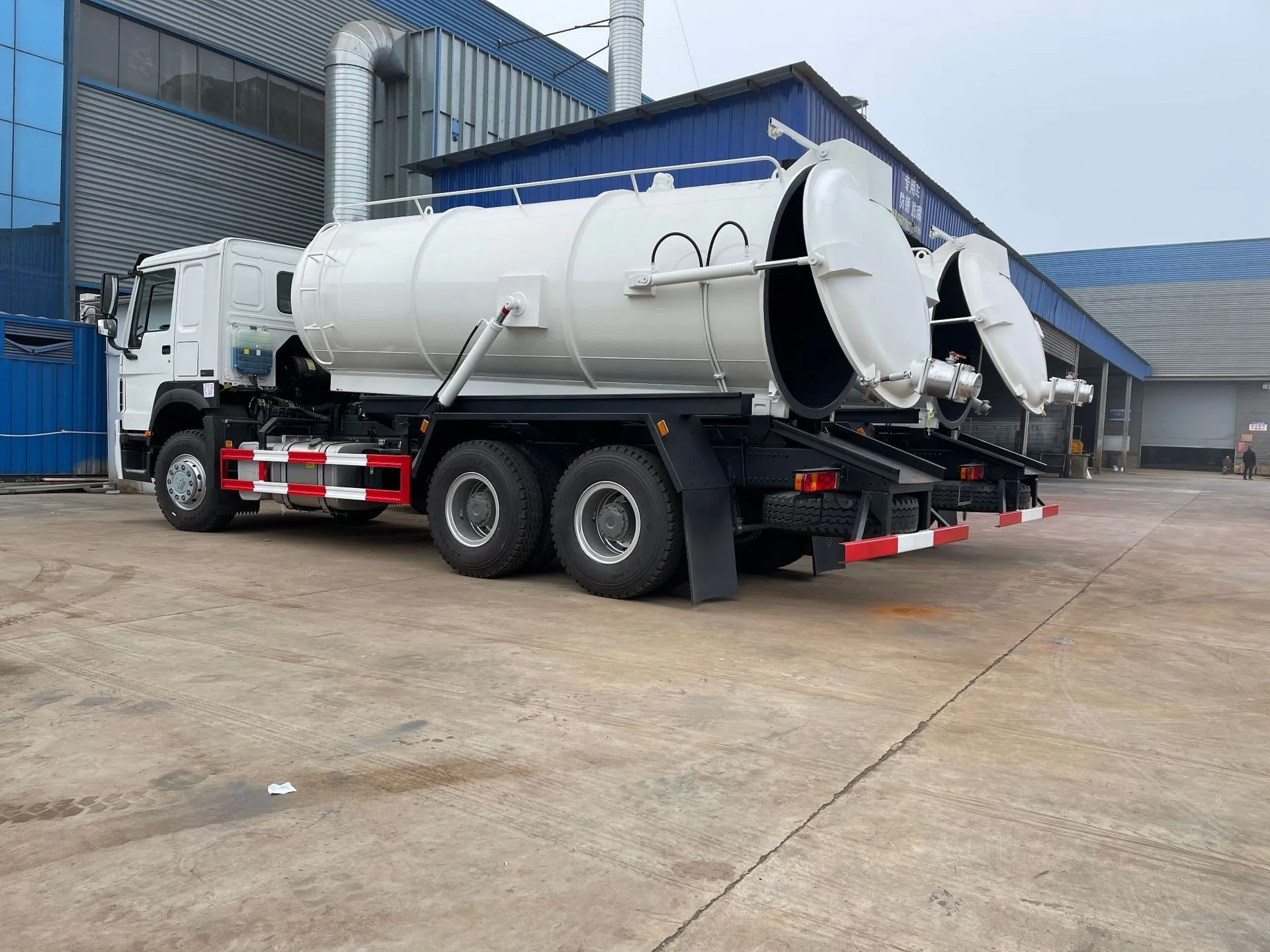
Sewage suction truck with the full-diameter rear tank door swung open, showing the discharge coupling
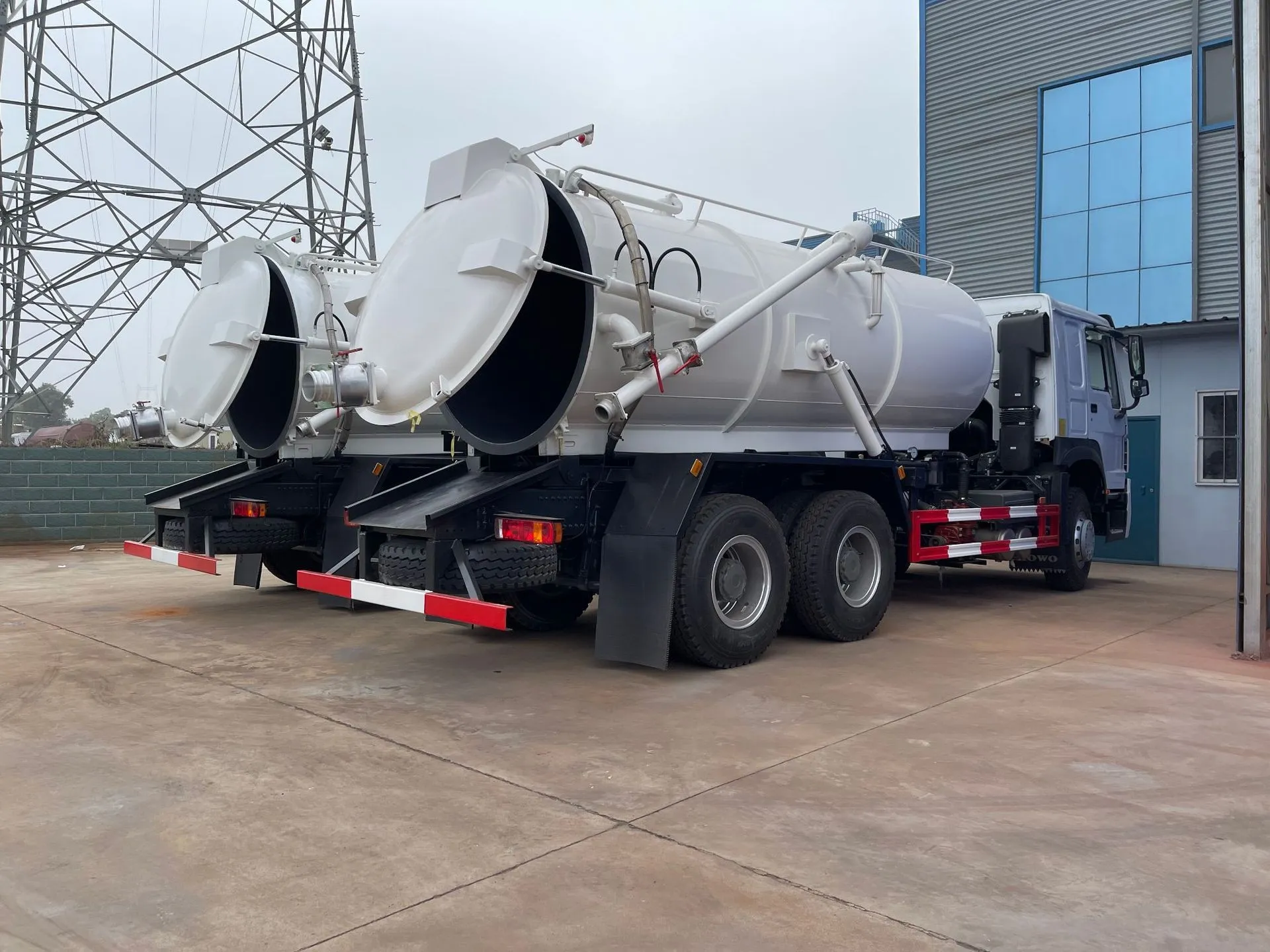
Two 6×4 vacuum tankers parked side by side with rear doors open before final inspection
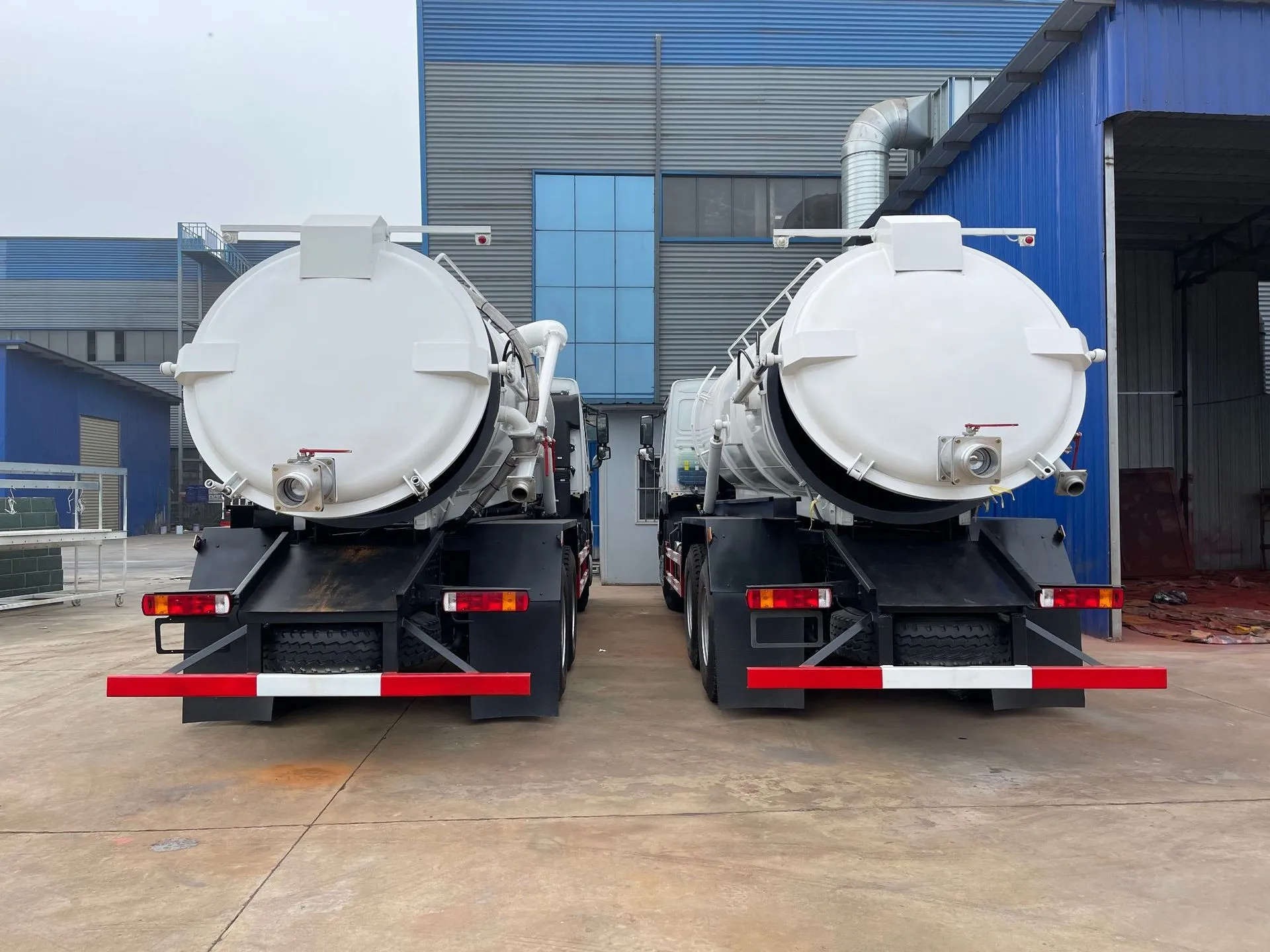
Rear view of two sewage tankers showing the ball-valve discharge outlets and rear underrun bars

Where these trucks work

  • Septic tank emptying for private contractors — the 8 m³ septic truck is the size most operators start with, small enough for residential lanes and legal on a 4×2 chassis in most markets.
  • Municipal sewer maintenance — clearing silted manholes and gully pots, usually working alongside a jetting unit and a road sweeper truck on the same shift.
  • Industrial and plant service — pumping process sludge, oil-water mix and washdown residue from sumps and interceptors, where a Q345B or stainless tank is worth the extra cost.
  • Construction and drilling sites — removing slurry from pile bores and settling pits, where the 18–20 m³ vacuum tanker earns its size on haul distance.
  • Camps, resorts and remote facilities — servicing holding tanks where there is no sewer connection and a septic pump truck is the only option.

Frequently asked questions

What tank sizes are available?

Sewage suction trucks are built from 8 m³ to 20 m³. An 8 m³ tank on a 4×2 chassis is the usual choice for septic work in residential areas; 18 m³ and 20 m³ tanks need a 6×4 chassis with a gross vehicle weight around 25 tonnes and suit municipal and industrial contracts with long haul distances.

How deep can the vacuum pump lift?

A rotary vane pump on a standard build lifts from 8 m below the truck and reaches 95 % vacuum, or 28 in Hg. Suction distance depends far more on hose diameter and the density of the medium than on the pump rating: a 3-inch hose in thick sludge will lift noticeably less than the same pump in clean effluent.

What is the difference between a vacuum tanker and a combined jetting truck?

A vacuum tanker only removes liquid and sludge. A combined jetting truck carries a second clean-water tank and a high-pressure pump, so it can break up a blockage with a jetting hose and then vacuum out the debris. A combined unit costs more and carries less waste for the same chassis, because the tank is split between sewage and clean water.

Can the tank handle corrosive or industrial waste?

The standard tank is Q235 mild steel with 6 mm walls, which suits domestic sewage and general sludge. For acidic effluent, oil residue or chemical waste, order the tank in Q345B or stainless steel and specify the medium when you enquire, so the seals, valves and hose material are matched to it.

Which chassis brands can the tank be mounted on?

HOWO, Dongfeng, Shacman, Hohan and FAW are all in regular production, and the choice usually comes down to which brand has a parts counter near your depot. If your fleet already runs one brand, mounting the vacuum body on the same chassis keeps servicing and driver training simple.

How is the truck shipped?

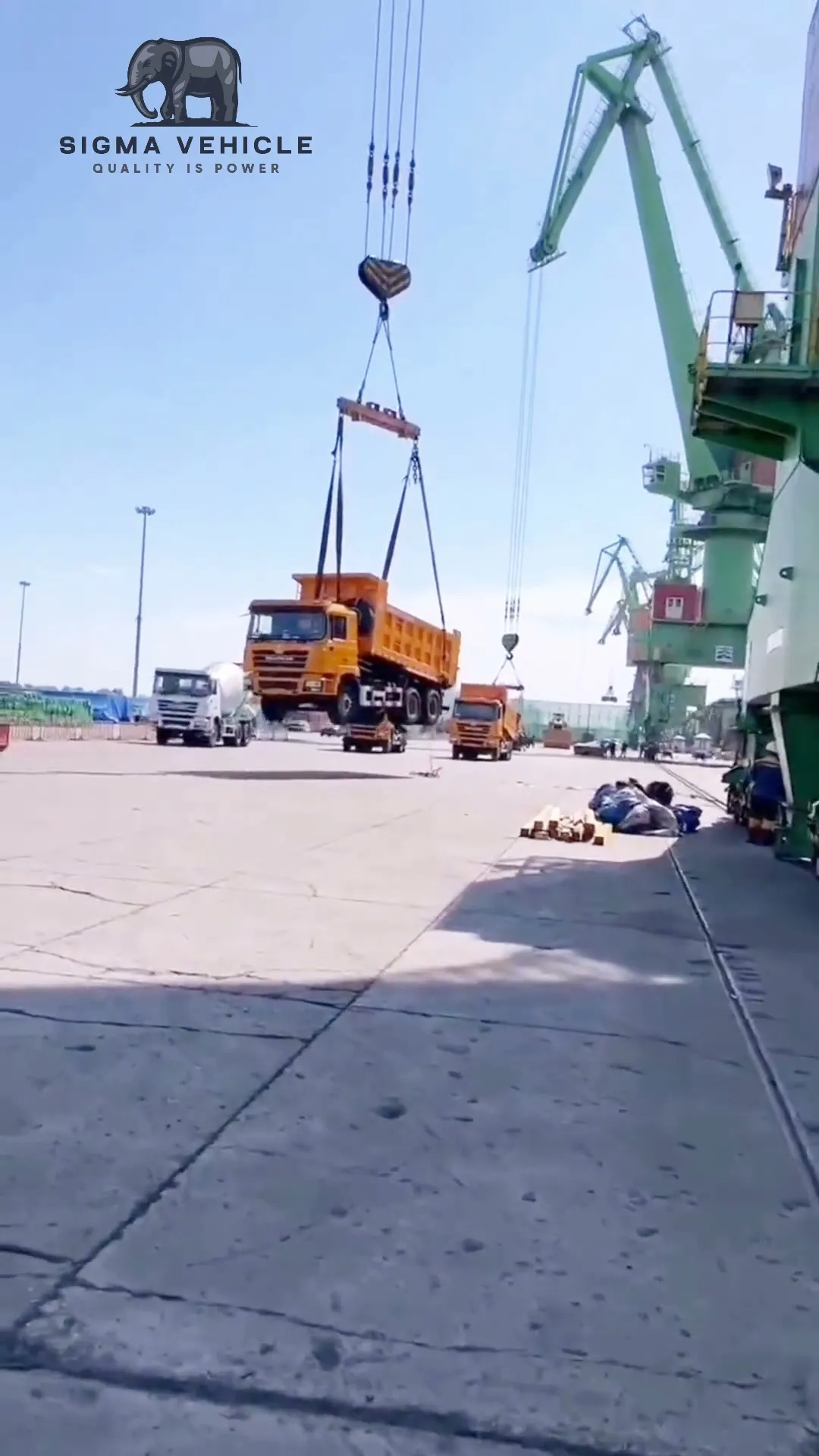
Trucks under 20 m³ ship by roll-on/roll-off from Qingdao or Shanghai; smaller units can be loaded in a 40-foot flat rack where RoRo service to the destination is thin. We prepare the certificate of origin, commercial invoice and packing list, and quote either FOB or CIF to your port. Recent sailings out of this yard include 22 units to Douala, Cameroon and a first batch into Tanzania, both on the same RoRo route a tanker order would take.

Tell us the tank size and the chassis you prefer

Send the capacity you need, the emission standard your country enforces and your destination port. We come back with a configuration sheet and an FOB or CIF price, usually within 72 hours. Not sure if the job needs a plain vacuum tanker or a combined jetting unit? Describe the work and we will say which one fits.