QuanPu Industrial Park, Liangshan County, Shandong, China [email protected] +86 199 6378 9330
Get a quote
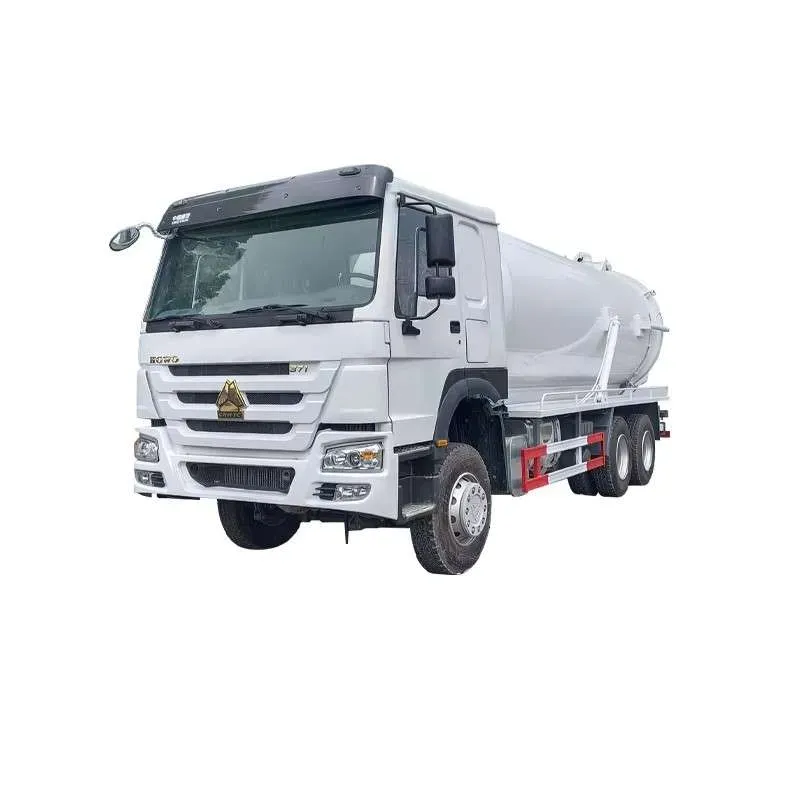
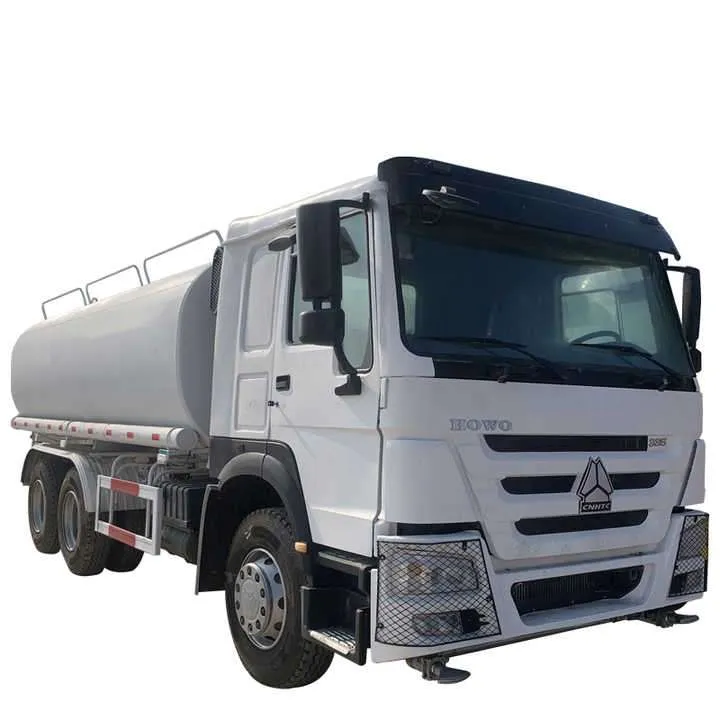
White HOWO water tank truck, front three-quarter view on a plain background

Municipal & Construction Water Supply Vehicle

Water Tank Truck

Water tankers from 7,000 to 20,000 litres, with one pump that both draws the refill and drives the spray bar.

Tank capacity
7,000 – 20,000 L
Drive
4×2 / 6×4
Pump flow
up to 60 m³/h
Spray width
6 – 15 m

Water tanker trucks for dust suppression, irrigation and road washing

A water tanker that sprays roads for dust control, fills irrigation lines and supplies washdown water on site — mounted on a chassis your workshop already services.

The tank is rolled from mild steel, 4 mm on the shell with 5 mm end covers, and finished with an anti-corrosion coating before the truck leaves the line. On the 8,000 L build the tank is elliptical in cross-section on a 4,200 mm wheelbase 4×2 chassis, which is the size most municipal and construction-site operators start with — big enough for a half-day route without a refill, small enough to stay legal on a standard driver's licence in most markets.

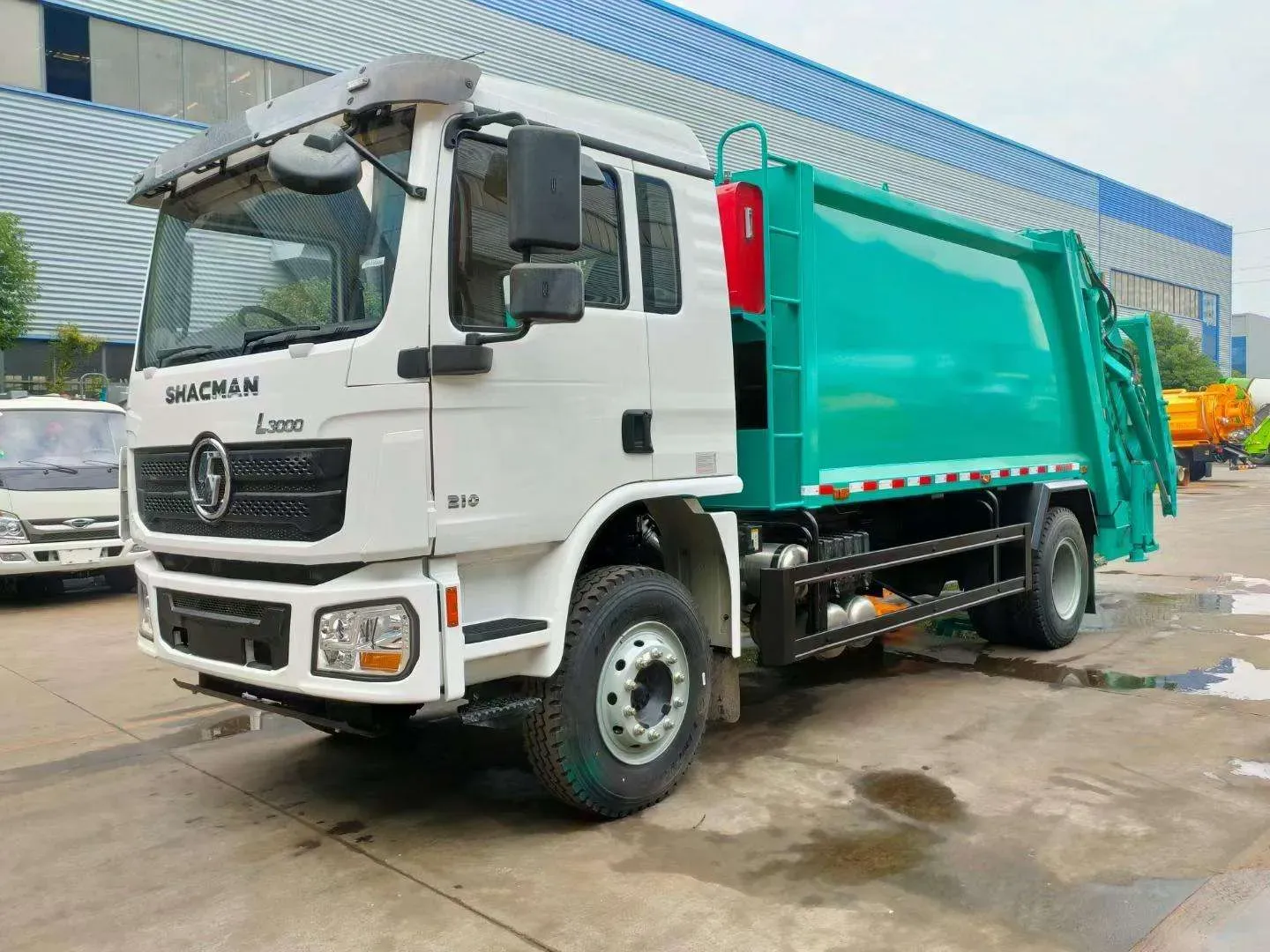
A self-sucking centrifugal pump rated at 60 m³/h against a 90 m total head handles both refilling from a hydrant or open source and pressurised spraying through the front, side and rear nozzles, covering a spray width of up to 15 m in a single pass. The same pump self-primes from a depth of up to 8 m, so a driver can draw from a river, tank or borehole without a separate priming pump. Fleets running a garbage truck route often schedule the water tanker right behind it, washing down the same streets the compactor just cleared.

Every truck is built as an export unit: left- or right-hand drive, Euro 2 through Euro 5 engines, and the inlet fittings, hose couplings and control labelling set to your local standard before it leaves the yard.

The pump is run up to its rated flow and every spray valve is opened under pressure while the truck is still on our line. Weeping joints and a nozzle that will not seat are cheap to fix in the workshop and expensive to fix on a site three continents away.

Specifications

Water Tank Truck — technical data

Representative 8,000 L build shown below, on a FAW 4×2 chassis. Final specification is confirmed per order against your chassis brand, emission standard, drive side and destination port.

Chassis

Chassis model FAW CA1160P1K2L2YA80
Drive type 4×2 (6×4 on 20,000 L builds)
Wheelbase 4,200 mm
Overall dimensions (L×W×H) 7,550 × 2,510 × 2,930 mm
Gross vehicle weight 16,000 kg
Curb weight 6,360 kg
Front / rear axle rating 6 t / 10 t
Tyres 11.00R20, 6+1 spare
Maximum speed 89 km/h

Engine & driveline

Engine XICHAI CA6DF2D-22, turbocharged inter-cooled diesel
Displacement 6.56 L
Rated power 162 kW (220 hp) at 2,300 rpm
Maximum torque 650 N·m at 1,400 rpm
Emission standard Euro 2 (Euro 3 / 4 / 5 optional)
Transmission FAST 8JS118TB, 8 forward + 1 reverse, manual

Water tank & spraying system

Tank capacity 8,000 L (8 m³)
Tank material Mild steel, anti-corrosion coated
Tank shape Elliptical
Tank thickness 4 mm shell / 5 mm end covers
Water pump VERYON 80QZ-60/90, self-sucking centrifugal
Pump flow 60 m³/h
Pump total head 90 m
Self-priming depth up to 8 m
Sprinkling width up to 15 m, front / side / rear duck-mouth nozzles
Water inlet 3–4 inch

Tank capacity options

Tank capacityDriveTypical chassisPump / spraying system
7,000 L4×2Chaochai 120 hp, GVW 12 tPTO pump 20 m³/h, water cannon range 30 m
10,000–12,000 L4×2ISUZU FTR, 205 hp, GVW 16 tPump 60 m³/h, spray width 15 m
14,000 L4×2Weichai 220 hp, GVW 20 tPTO pump 20 m³/h, spray width 15 m
20,000 L6×4Dongfeng, GVW 22 tSprinkling width 6–12 m, cannon range 28 m+

How these water tankers are put together

One pump does both jobs

A 60 m³/h self-sucking centrifugal pump handles pulling water from an open source and pushing it out through the spray bar in the same circuit, so the truck is not carrying a second pump for one job or the other. Self-priming from 8 m below the truck means a driver can refill from a river or tank without a separate priming unit.

Nothing exotic to source when it needs a part

Chassis are FAW, ISUZU, Dongfeng or HOWO — brands with parts counters in most of the markets we ship to. The pump, PTO and spray valves are standard components, so a water bowser truck stays on its route instead of waiting on a container of spares.

Coated tank, pressure-tested before it ships

The tank shell is 4 mm mild steel with 5 mm end covers and an anti-corrosion coating, sized to hold its shape under a half-full load on rough ground. Each unit is pressure-tested at rated pump flow before crating, and the spray valves are checked under load rather than by eye.

Hydrant fittings that match the ones on your side

Left- or right-hand drive, Euro 2 to Euro 5, local hose and coupling sizes, control labelling in your language. We prepare the CO, invoice and packing list for your customs broker and can quote FOB Qingdao or CIF to your port.

Water tanker trucks in the yard

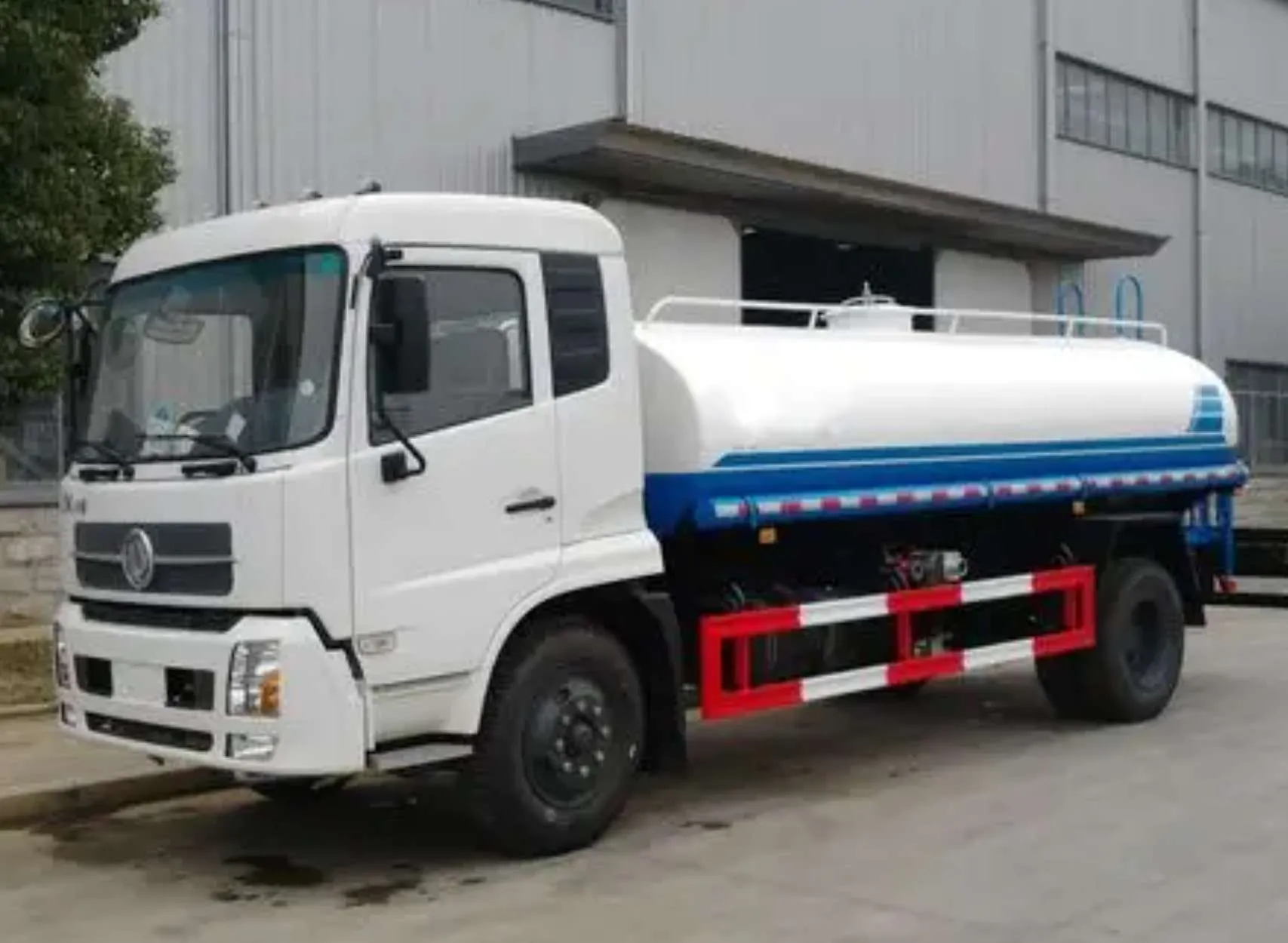
Dongfeng chassis water tank truck with blue-striped tank, side three-quarter view outside the workshop
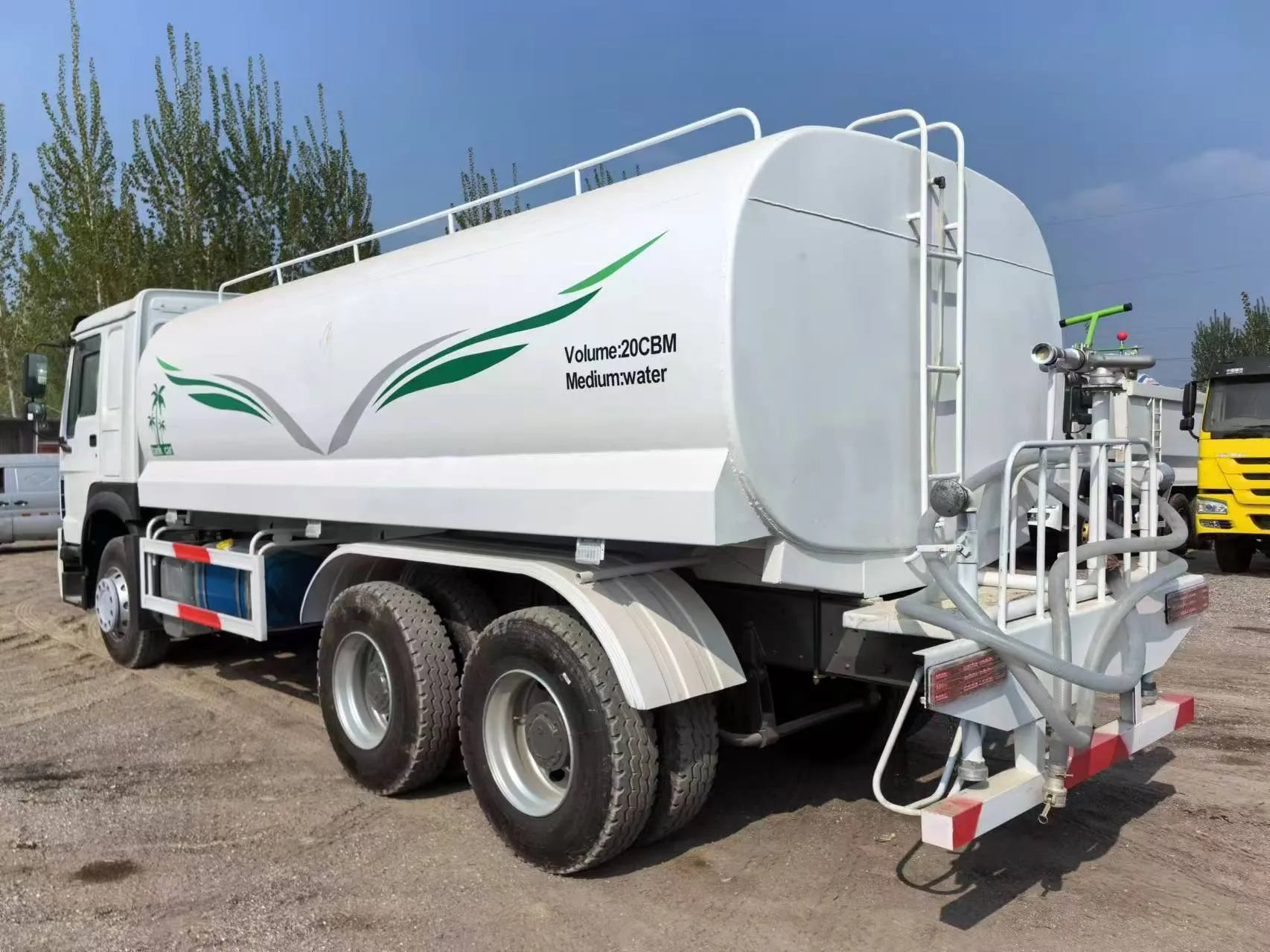
Rear of a 20 m³ water tank truck showing the spray nozzle, hoses and discharge valve assembly
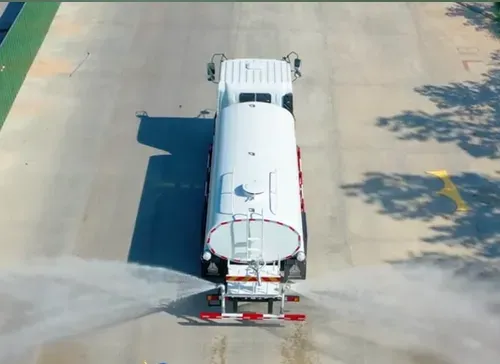
Aerial view of a water tank truck spraying the road surface for dust suppression

Where these trucks work

  • Municipal road spraying and dust suppression — the 8,000–12,000 L water tanker is the size most city sanitation departments run, spraying a 15 m width in a single pass down a standard road.
  • Construction and mining sites — dust control on haul roads and stockpiles, where the 14,000–20,000 L tank on a 6×4 chassis cuts refill trips on a large site.
  • Municipal greening and irrigation — watering street trees, median planting and new turf where there is no fixed irrigation line yet.
  • Site and camp supply runs — filling washdown tanks, temporary camps and standpipes from a water lorry rather than laying temporary pipe.
  • Paired with a compactor route — many fleets run the water tanker directly behind a garbage truck or road sweeper, washing down the same streets the collection round just cleared.

Frequently asked questions

What tank sizes are available?

Water tanker trucks — also called water bowsers or water lorries — are built from 7,000 L to 20,000 L. A 7,000–12,000 L tank on a 4×2 chassis is the usual choice for municipal spraying and site work; the 20,000 L tank needs a 6×4 chassis and suits large construction sites or long haul routes between refill points.

Is there a 5,000 litre or smaller water tanker?

Our standard range starts at 7,000 L. If a smaller build is a hard requirement for your fleet, say so in your enquiry with the chassis you have in mind and we will confirm whether a smaller tank can be sourced against your order.

What is the pump flow and spray width?

The standard pump on the 8,000–14,000 L builds moves 60 m³/h against a 90 m total head, spraying a width of up to 15 m in a single pass through front, side and rear nozzles. The self-priming depth is up to 8 m, so the truck can refill from a river, tank or borehole without a separate priming pump.

What is the difference between a water tanker and a sewage or waste water tanker?

A water tanker carries clean water for spraying, irrigation or washdown and has no vacuum system. A sewage suction truck does the opposite job — it removes waste water and sludge as a sewage tanker or waste water tanker using a vacuum pump — and the two tanks are never interchangeable, since a water tank has no rated vacuum pump or sealed rear door for suction work.

Can the same truck supply drinking water?

The standard tank is mild steel with an anti-corrosion coating, built for dust suppression, irrigation and washdown water, not certified potable supply. If your contract requires a food-grade or stainless tank for drinking water distribution, specify it when you enquire so the tank material and fittings can be matched to that use.

How is the truck shipped?

Trucks under 20,000 L ship by roll-on/roll-off from Qingdao or Shanghai; smaller units can be loaded in a 40-foot flat rack where RoRo service to the destination is thin. We prepare the certificate of origin, commercial invoice and packing list, and quote either FOB or CIF to your port. Vehicles from this yard have gone out the same way to Tanzania and Ghana, the latter loaded at Lianyungang rather than Qingdao when the sailing suited it better.

Tell us the tank size and the chassis you prefer

Send the capacity you need, the emission standard your country enforces and your destination port. We come back with a configuration sheet and an FOB or CIF price, usually within 72 hours. If you are already holding quotes from other suppliers, send us the same spec sheet and we will price against it line for line.